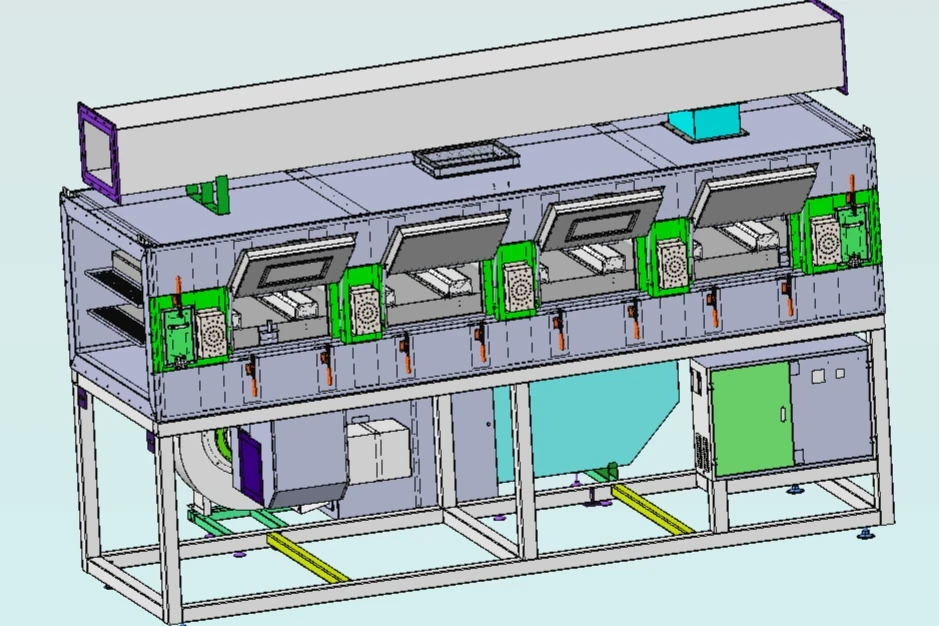
Solution to the pain point of laser heating in high-speed coating machines
As the next-generation core technology replacing traditional hot air and infrared drying, laser heating technology for high-speed coating machines possesses core advantages such as extremely fast drying, energy efficiency, and excellent quality in the industrialization process of high-end coating fields like lithium batteries and solid-state batteries. However, it still faces pain points such as high initial investment, insufficient operational stability, poor process adaptability, and difficult safety control, which severely restrict its large-scale implementation. This proposal is based on the two mainstream technological paths of existing VCSEL arrays and high-power semiconductor lasers, combined with the technical practices of companies like Lemon Photonics, Delong Laser, and Haimuxing. It proposes targeted solutions to address core pain points
Solution Details
Learn more about the core content of this solution
High speed coating machine laser heating technology, as a next-generation core process to replace traditional hot air and infrared drying, has the core advantages of fast drying, energy saving and high efficiency, and excellent quality in the industrialization process of high-end coating fields such as lithium batteries and solid-state batteries. However, it still faces pain points such as high initial investment, insufficient operational stability, poor process adaptability, and difficult safety control, which seriously restrict its large-scale implementation. This solution is based on the existing mainstream technology paths of VCSEL arrays and high-power semiconductor lasers, combined with the technical practices of enterprises such as Lemon Photon, Delong Laser, and Haimu Star, to propose targeted solutions to core pain points, achieve stable, efficient, and low-cost application of laser heating technology, and help upgrade production lines and reduce costs and increase efficiency.
1、 Core pain point breakdown
Based on the current industrial application status of high-speed coating machine laser heating, its core pain points can be summarized into four categories, covering the four dimensions of cost, stability, process, and safety, as follows:
• Cost pain points: The initial investment cost of high-power laser modules and high-precision control systems is high, which is 30-50% higher than that of traditional oven equipment; The energy consumption control of some schemes did not meet expectations, coupled with equipment maintenance costs, resulting in significant pressure on long-term operating costs.
• Stable pain points: In large-scale production scenarios, continuous operation of laser systems for 24 hours is prone to power attenuation and optical path deviation, leading to a decrease in heating uniformity; Insufficient matching of water cooling and heat dissipation systems has led to an increase in equipment failure rate in high-temperature environments, affecting production line utilization rate.
• Process pain points: Different coating media (water-based/oil-based slurries, solid electrolytes) have significant differences in absorption of laser wavelength and power, and lack a standardized process parameter system; Insufficient synergy between laser heating, coating speed, and tension control can lead to quality issues such as electrode cracking, solvent residue, and edge accumulation.
• Safety pain points: High power laser radiation poses personal safety hazards, and inadequate optical path protection can easily lead to safety accidents; The solvent vapor generated during laser heating combines with high-temperature environments, posing a risk of fire and explosion, and making safety control difficult.
2、 Targeted solutions
(1) Cracking cost pain points: graded investment+energy optimization+operation and maintenance cost reduction
Aiming at the core problems of high initial investment and high operating costs, the combination strategy of "hierarchical selection+energy consumption optimization+operation and maintenance simplification" is adopted to balance the progressiveness of technology and controllability of cost, so as to reduce the cost of the whole life cycle.
1. Graded selection to adapt to different production capacity requirements: Based on the production line scale and product accuracy requirements, select equipment for the corresponding technical path to avoid excessive investment. For small and medium-sized production capacity and high-end precision requirements (such as solid-state electrolyte coating), the lemon photon VCSEL array solution is selected. Its modular design can achieve on-demand expansion, and the initial investment can be reduced by 20%; Large scale high-speed production line (≥ 150m/min), using Delong Laser and Haimuxing high-power semiconductor laser composite solution, improving energy efficiency and diluting unit production cost through composite heating. At the same time, sign long-term cooperation agreements with equipment suppliers, strive for bulk procurement discounts and technical service fee reductions, and reduce initial procurement costs.
2. Whole process energy consumption optimization to reduce operating costs: Drawing on the energy efficiency design of Lemon Photon QuantaHeat laser heater, adopting adaptive optics system and patented beam shaping technology, the energy utilization rate is increased to over 80%, reducing energy consumption by more than 50% compared to traditional hot air drying; Based on the experience of upgrading the insulation of the Haimuxing oven, the laser heating module is designed with insulation layers and bridge insulation to control the external temperature of the module to not exceed the ambient temperature+15 ℃ and reduce heat loss. In addition, optimizing the laser power adjustment logic, dynamically adjusting the power output according to the coating speed and thickness, avoiding energy waste, the 1GWh production line can save more than 2 million kWh of electricity per year per single line.
3. Simplify the operation and maintenance process to reduce maintenance costs: Adopt modular design (such as VCSEL array module, laser power module) to achieve rapid replacement of faulty modules and reduce downtime for maintenance; Establish a full lifecycle operation and maintenance system for equipment, drawing on the 20000 hour non attenuation operation and maintenance experience of Lemon Photon Laser System. Regularly calibrate and maintain the laser module and water cooling system to reduce the failure rate to below 2%; By relying on a digital monitoring system, real-time warning of equipment operation status can be achieved, potential faults can be identified in advance, emergency maintenance costs can be reduced, and maintenance manpower can be reduced by 30%.
(2) Cracking stable pain points: system optimization+closed-loop control+environment adaptation
To address the issues of insufficient stability during continuous operation and decreased heating uniformity, we will start from three aspects: equipment system, control logic, and environmental adaptation, in order to improve the reliability of equipment operation and ensure continuous and stable production on the production line.
1. Equipment system optimization to enhance stability: High reliability core components such as Lemon Photon's 10000 watt VCSEL massive laser engine and Delong Laser's high-power semiconductor laser module are selected to ensure stable power output; Optimize the optical path design, adopt adaptive optics system and beam shaping technology to avoid optical path deviation and ensure that the optical field uniformity is ≥ 90% (VCSEL scheme ≥ 95%); Upgrade the water cooling system and adopt intelligent filtering water cooling design to ensure continuous and stable operation of the laser module at an ambient temperature of 40 ℃, avoiding power attenuation and equipment failure caused by high temperature.
2. Closed loop control for precise regulation: Build a three in one closed-loop control system of "laser power temperature coating speed", integrating equipment such as X/β surface density meter, CCD visual inspection, infrared temperature measurement, etc., to collect real-time coating temperature, thickness, and uniformity data, dynamically adjust laser power, scanning speed, and heating area to ensure heating uniformity and stability. For example, using millimeter level area temperature control technology (VCSEL scheme) or ± 2 ℃ precise temperature control (high-power semiconductor scheme) to avoid local overheating or insufficient heating and improve the stability of equipment continuous operation.
3. Environmental adaptation ensures operational safety: In response to environmental factors such as temperature, humidity, and dust in the production workshop, the laser heating module is sealed and protected to prevent dust from entering the optical path and affecting the heating effect; Optimize the ventilation system in the workshop, timely discharge the heat generated by laser heating, and maintain stable temperature in the workshop environment; By adopting a split layout to optimize the circuit and reduce equipment vibration, the stability under high-speed operation can be further improved, and the comprehensive utilization rate of the equipment can be increased by more than 15%.
(3) Cracking process pain points: parameter standardization+collaborative control+scene adaptation
To address the issues of poor process adaptability and unstable quality, a standardized process system is established based on multi physics coupling models and industry practical experience, achieving deep synergy between laser heating and coating processes.
1. Establish a standardized process parameter database: Based on the characteristics of different coating media (water-based/oil-based slurries, solid electrolytes, ceramic slurries), establish corresponding relationships between laser wavelength, power density, heating time, coating thickness, and drying effect through experiments and numerical simulations, and form a standardized process parameter database. For example, to address the absorption difference between water-based and resin based slurries, optimize the laser wavelength selection (445nm wavelength is more suitable for high absorption slurries); In response to the temperature hysteresis and stress concentration issues that are prone to occur in thick film coating, pulse laser heating is used to balance the evaporation rate and internal diffusion rate, avoiding electrode cracking and uneven porosity.
2. Implement collaborative control of laser heating and coating process: Deeply link the laser heating module with the tension control, die head adjustment, and winding system of the coating machine to synchronously adjust the coating speed, tension, and laser heating parameters. For example, when the coating speed is increased to 150m/min, the laser power density is automatically increased to ensure that the drying speed matches the coating speed; By adopting zone temperature control technology, the laser power in different areas of the polarizer is dynamically adjusted to avoid edge rolling and cracking of the active polarizer, improve the consistency of the polarizer surface density to ≤± 1.0%, and control the thickness fluctuation within ± 1 μ m.
3. Scenario adaptation optimization process plan: Optimize the technical path for different application scenarios, select VCSEL array solution for high-end polarizer and solid-state electrolyte coating, and utilize its high uniformity and millimeter level temperature control advantages to improve product quality; High power semiconductor laser composite solution is used for high-speed mass production and wide width polarizer coating, combined with hot air, infrared and other composite heating methods to achieve rapid heating in 0.1 seconds, suitable for high-speed coating requirements of ≥ 150m/min; Optimize the installation layout of the laser heating module for the secondary drying scenario of unwinding, achieve efficient drying, and improve product yield.
(4) Cracking security pain points: protection upgrade+intelligent monitoring+standardized management
In response to the safety hazards of laser radiation and solvent vapor, a triple strategy of "hardware protection+intelligent monitoring+standardized management" is adopted to construct a full process safety protection system, ensuring the safety of personnel and production.
1. Hardware protection upgrade to eliminate safety hazards: The laser light path is designed to be fully enclosed, and radiation protection covers and safety interlock devices are installed. When the protective cover is opened, the laser system automatically shuts down to avoid laser radiation injuries; Install explosion-proof and fireproof devices in the laser heating area, equipped with a solvent vapor recovery system, to promptly discharge the solvent vapor generated during the heating process, reducing the risk of fire and explosion; Set up safety warning signs in the equipment operation area, divide the danger zone, and prohibit unrelated personnel from entering.
2. Intelligent monitoring to achieve risk warning: Build a safety monitoring system to monitor real-time parameters such as laser power, heating temperature, solvent vapor concentration, etc. When the parameters exceed the safety threshold, an automatic warning will be issued and the machine will be shut down to avoid the expansion of accidents; Using infrared thermal imaging technology to monitor the temperature distribution of the laser heating area in real time and detect local overheating hazards in a timely manner; Through the industrial Internet of Things interface, security monitoring data is linked with the production line management system to achieve real-time risk control.
3. Standardize management and strengthen safety awareness: develop and improve safety operating procedures, provide professional training for equipment operators, and only those who pass the assessment can take up their posts. Focus on training in laser safety protection, emergency response, and other knowledge; Regularly conduct safety inspections and emergency drills to promptly identify safety hazards; Establish a safety responsibility system, clarify the safety responsibilities of each position, and ensure that safety management is implemented effectively.
3、 Measures to ensure the implementation of the plan
(1) Technical support
Establishing deep cooperation with leading equipment suppliers such as Lemon Photon, Delong Laser, and Haimu Star, relying on their technological advantages to provide customized equipment and technical support; Strengthen the cooperation between industry, university and research institute, cooperate with universities and scientific research institutions to carry out technology research and development such as multi physical field coupling model optimization and laser power control, and continuously improve the progressiveness and stability of the scheme; Establish a technology iteration mechanism, track the latest technological progress in the industry, optimize solutions in a timely manner, and adapt to the needs of new coating materials and production lines.
(2) Personnel support
Establish a professional technical team covering areas such as equipment operation, maintenance, and process optimization, and regularly conduct technical training and skill assessments to enhance the team's professional capabilities; Introduce professional talents related to laser technology and coating process to make up for the shortage of technical talents; Establish a technical exchange mechanism, organize teams to exchange and learn from industry benchmark enterprises, and draw on advanced experience.
(3) Management guarantee
Establish a comprehensive system for equipment management, process management, and safety management, standardize equipment operation, maintenance, and repair processes, and ensure that plans are implemented in an orderly manner; By adopting digital management methods, integrating equipment operation data, process parameters, and safety monitoring data, we can achieve visual management of the entire production line process and improve management efficiency; Establish a mechanism for evaluating the implementation effectiveness of the plan, regularly evaluate the stability of equipment operation, cost control, product quality, etc., and adjust and optimize the plan in a timely manner.
4、 Summary of Program Value
This plan addresses the four core pain points of laser heating in high-speed coating machines, and combines existing mainstream technology paths and industry practices to achieve low-cost, high stability, and high adaptability applications of laser heating technology through targeted strategies such as graded investment, system optimization, process standardization, and safety protection upgrades. The plan can effectively reduce the initial investment and operating costs of equipment, improve the stability of equipment continuous operation and production line utilization rate, solve the problems of poor process adaptability and unstable quality, and build a full process safety protection system to ensure personnel and production safety.
This solution is suitable for the large-scale production needs of high-end coating fields such as lithium batteries and solid-state batteries. It can not only fully leverage the core advantages of laser heating technology, such as fast drying, energy saving and high efficiency, and excellent quality, but also promote the intelligent and low-carbon upgrading of coating production lines, help enterprises reduce costs, enhance product competitiveness, and assist laser heating technology in rapidly transitioning from prototype testing to large-scale implementation, becoming a paradigm shift core solution in the coating and drying field.
Related Products
Products involved in this solution
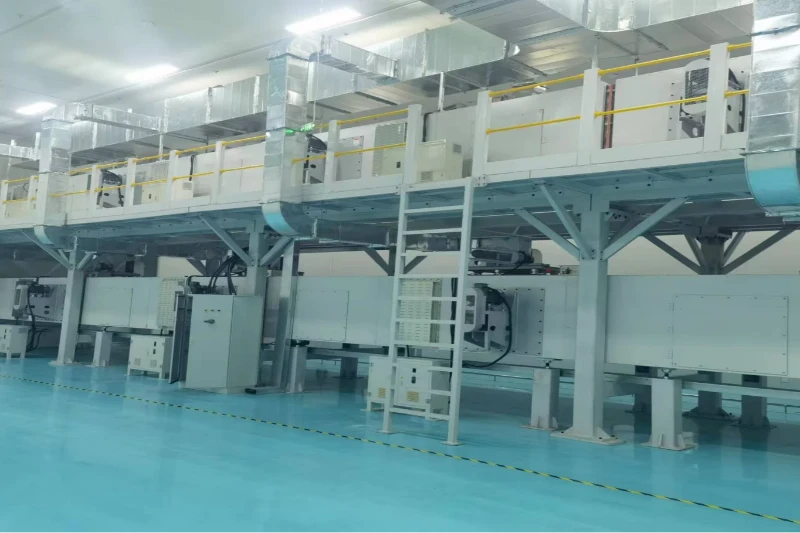
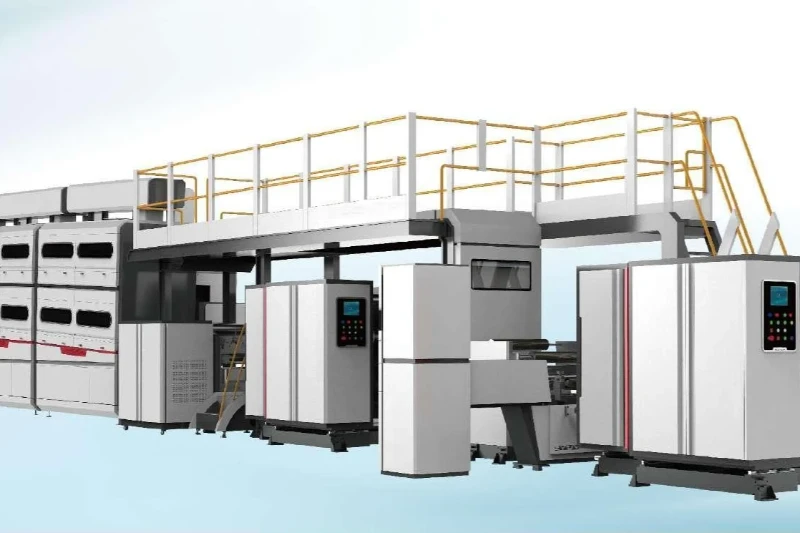
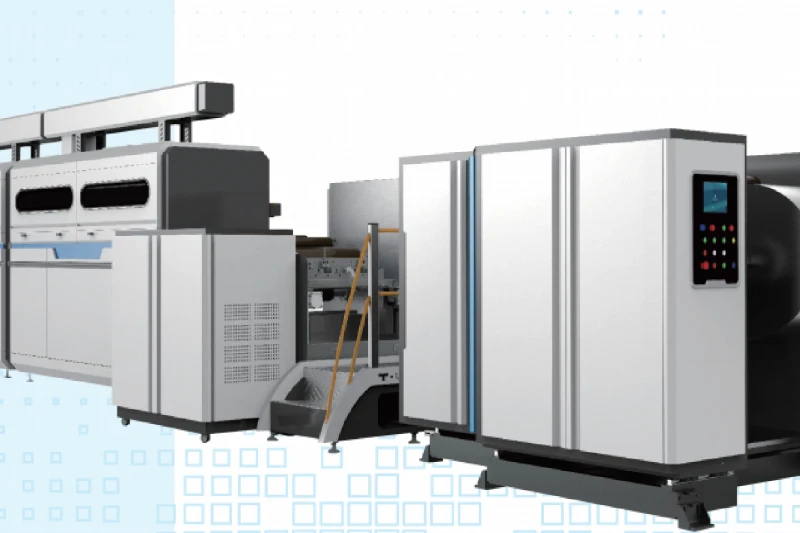
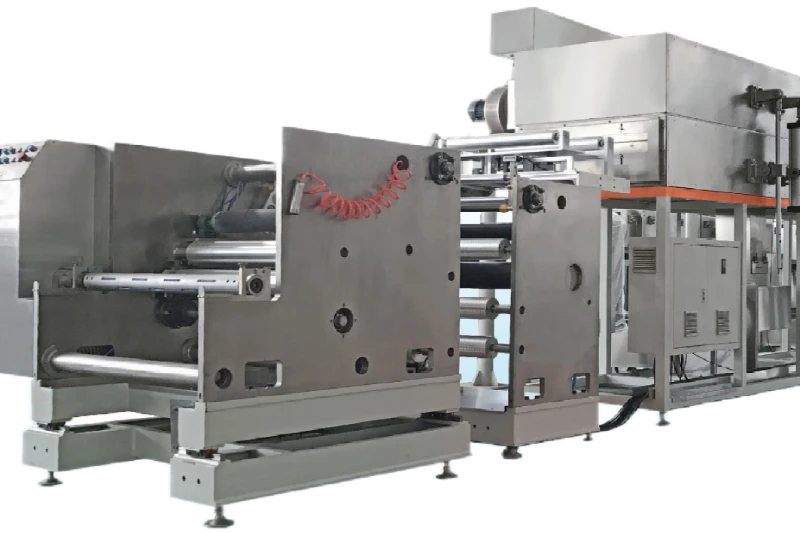
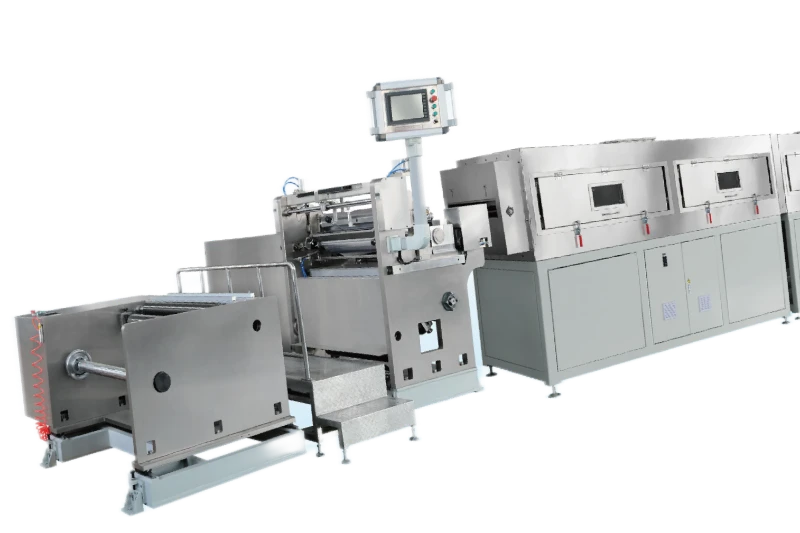
Double-layer wide-width high-speed extrusion coating machine
SYD-ZY1600S-ZQ
High-speed double-layer extrusion coating machine
The core features of the double-layer split-type high-speed coating machine include independent control of the two layers, a split-type structure, high-speed and high-precision operation, flexible adaptability, and easy maintenance. It balances productivity, precision, and process flexibility in double-sided/double-layer coating of lithium electrode sheets.
View Product